

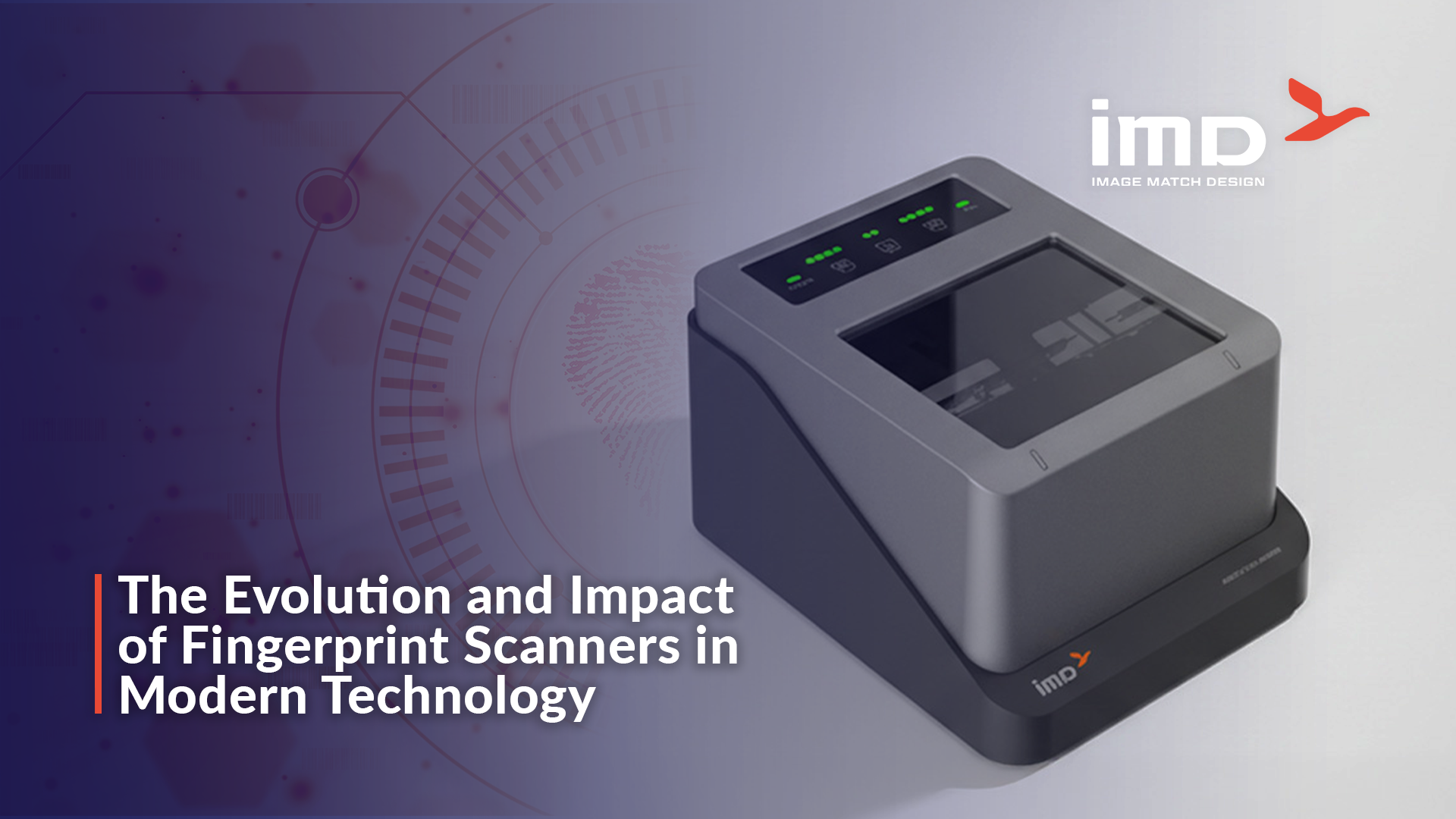
The Evolution and Impact of Fingerprint Scanners in Modern Technology
Estimated Reading Time: 8 minutes
- The unique patterns of fingerprints make them a secure method of authentication.
- Fingerprint scanners have various types, each with its own advantages and limitations.
- They find application in access control, personal devices, finance, and law enforcement.
- Maintaining and educating users on best practices can enhance their effectiveness.
- Future innovations promise to further integrate fingerprint scanning technology with advancements in AI and user experience.
- MatriXcan™ represents the next generation of fingerprint sensing, combining superior image quality with FBI-certified performance for mission-critical applications.
Table of Contents
- Understanding Fingerprint Scanners
- Types of Fingerprint Scanners
- MatriXcan™: Advanced Fingerprint Technology
- Applications of Fingerprint Scanners
- The Importance of Fingerprint Scanners in Modern Technology
- Best Practices for Using Fingerprint Scanners
- Future of Fingerprint Scanners
- Conclusion
- Frequently Asked Questions (FAQs)
Understanding Fingerprint Scanners
What is a Fingerprint Scanner?
A fingerprint scanner is a device that captures the unique patterns of ridges and valleys on a person's finger, converting them into a digital format for identity verification. This technology has found its way into various applications, including access control systems in homes, workplaces, and personal devices. Fingerprint scanning relies on the distinct features of each individual's fingertips, which remain unchanged throughout a person's life (barring injury). This characteristic makes it a reliable method for authentication.
How Fingerprint Scanners Work
The core process of fingerprint scanning involves several stages:
- Detection: When a finger is placed on the scanner, the device detects the unique minutiae—distances, angles, and other features—between ridges and valleys.
- Encoding: These minutiae are then encoded into numeric codes, which are stored for future reference.
- Matching: When a fingerprint is scanned again, the new codes are compared to the stored template. If they match, access is granted.
During the enrollment phase, multiple scans are taken to establish a baseline for accurate comparison. Importantly, fingerprint scanners do not store raw images of the fingerprints, enhancing user privacy and security.
Types of Fingerprint Scanners
Fingerprint scanners vary in technology and usage. Here, we explore the four main types of scanners:
Optical Scanners
Mechanism: Shines light to photograph ridges and valleys via a CCD/CMOS sensor.
Key Advantages: Affordable and simple to implement.
Common Uses: Consumer electronics, laptops.
Limitations: Less secure in outdoor environments.
Capacitive Scanners
Mechanism: Uses an array of tiny capacitors to measure electrical charge changes.
Key Advantages: Fast and precise; widely used in phones.
Common Uses: Smartphones, touchscreens.
Limitations: Sensitive to moisture and static.
Most Secure
Ultrasonic Scanners
Mechanism: Employs high-frequency sound waves to create 3D images of fingerprints.
Key Advantages: Highly secure and works in varying conditions.
Common Uses: Premium smartphones, high-end devices.
Limitations: Slower than capacitive variants.
Thermal Scanners
Mechanism: Detects temperature differences between ridges and valleys on contact.
Key Advantages: Simple method for contact detection.
Common Uses: Specialized applications.
Limitations: Least common and affected by ambient temperature.
Next Generation
MatriXcan™
Mechanism: Advanced signal processing captures high-precision minutiae from large-area fingerprint sensors, extracting fine ridge details under even the most challenging conditions.
Key Advantages: Superior image quality, real-time authentication, exceptional performance on dry, wet, worn, or partially damaged prints, and FBI FAP50 certification.
Common Uses: National ID systems, border control, international airports, high-security government and military facilities.
Limitations: Higher cost than consumer-grade solutions—reflecting its enterprise-level engineering and certification standards.
MatriXcan™: Advanced Fingerprint Technology
While optical, capacitive, ultrasonic, and thermal technologies each address specific use cases, MatriXcan™ represents a distinct class of fingerprint sensing engineered specifically for high-stakes, high-throughput environments where failure is not an option.
What Sets MatriXcan™ Apart
Developed by iMD (Image Match Design), MatriXcan™ is purpose-built for large-area fingerprint acquisition. Unlike standard consumer sensors that struggle with degraded prints, MatriXcan™ maintains exceptional image quality across a broad range of real-world conditions:
- Degraded Print Resilience: Performs reliably on dry, worn, aged, or partially damaged fingerprints—common challenges in high-volume border and ID enrollment scenarios.
- High-Precision Minutiae Detection: Advanced signal processing extracts fine ridge details at a level of accuracy that directly reduces false rejection and false acceptance rates.
- Real-Time Authentication: Instantaneous processing is critical in high-traffic environments such as international airports and border checkpoints, where speed and accuracy must coexist.
- FBI FAP50 Certification: The FAP50 scanner powered by MatriXcan™ meets the FBI's rigorous Image Quality Specifications, a mandatory standard for law enforcement and government identity programs.
Where MatriXcan™ Is Deployed
MatriXcan™ technology is actively used across sectors where the cost of misidentification is high:
- National ID Programs: Governments rely on MatriXcan™ to enroll and verify citizens accurately, even across diverse demographics with varying fingerprint quality.
- Border Control & Immigration: Deployed at international airports and border checkpoints, MatriXcan™ handles thousands of verifications per day without compromising speed or accuracy.
- Law Enforcement & Forensics: High-resolution image capture supports forensic-grade identification workflows that demand the highest quality biometric data.
Applications of Fingerprint Scanners
Access Control Systems
One of the most widespread applications of fingerprint scanners is in access control systems. Organizations use these systems to secure sensitive areas by allowing only authorized personnel to enter. This has enhanced security protocols, making unauthorized access significantly more difficult.
Mobile Devices and Personal Electronics
Fingerprint scanners have become a staple in mobile devices, with most smartphones and tablets now equipped with this technology. They provide a secure, password-free means of unlocking devices, making it easier for users to access their information and applications swiftly.
Financial Transactions
As online banking grows, fingerprints are increasingly being used for secure financial transactions. Authentication through biometrics reduces the risk of fraud and unauthorized access, ensuring that sensitive financial information is adequately protected.
Government and Law Enforcement
Fingerprint scanning technology plays a crucial role in law enforcement and government security measures. From criminal identification to passport authentication, efficient and accurate fingerprint scanning is invaluable in maintaining public safety.
The Importance of Fingerprint Scanners in Modern Technology
Enhancing Security
Fingerprint scanners offer a substantial advancement in security measures. By leveraging unique biological traits, they tie identity directly to physical characteristics, minimizing the risk of impersonation and fraud. They provide an alternative to traditional password systems, which are often vulnerable to theft and hacking.
User Convenience
In a world that values efficiency and rapidity, fingerprint scanners streamline the authentication process. Users can gain access to devices and services quickly, without the need to remember complex passwords, thereby enhancing user experience.
Fraud Prevention
The advanced capabilities of fingerprint scanners, particularly ultrasonic technology and purpose-built solutions like MatriXcan™, significantly reduce opportunities for spoofing. By generating high-precision, three-dimensional-quality maps of fingerprints and maintaining performance in less-than-ideal conditions (like dirt or moisture), these systems are substantially more secure than their traditional counterparts. MatriXcan™'s FBI FAP50 certification further validates its anti-spoofing reliability for government-grade deployments.
Best Practices for Using Fingerprint Scanners
To maximize the benefits of fingerprint scanning technology, consider these best practices:
- Regular Updates: Ensure that fingerprint scanning devices are regularly updated to prevent vulnerabilities due to outdated software.
- Proper Maintenance: Keep scanners clean and free from dust and moisture to maintain their effectiveness and accuracy.
- Diverse Authentication Methods: Consider implementing multiple forms of authentication (such as password, PIN, or facial recognition) alongside fingerprint scanning for added security.
- User Education: Educate users on how to use the scanners correctly and the importance of maintaining the security of their biometric data.
- Awareness of Limitations: Understand the limitations of the fingerprint technology in use, ensuring it is appropriate for the level of security required.
Future of Fingerprint Scanners
As technology progresses, the future of fingerprint scanners looks promising. Innovations in algorithms and sensor technology are leading to more secure and efficient systems. For example:
- In-display Scanners: Advanced smartphones now feature in-display fingerprint scanners that utilize light and capacitance variations for secure identification, enhancing aesthetics and usability.
- Integration with AI: Future systems may integrate artificial intelligence to analyze and enhance fingerprint data, improving accuracy and reducing false acceptance.
- Multi-modal Biometrics: The trend towards multi-modal biometrics pairs fingerprint scanning with other biometric identifiers, such as facial recognition or iris scanning, for even greater security.
- Enterprise-Grade Sensing Platforms: Technologies like MatriXcan™ are setting a new benchmark by bringing forensic-quality, large-area fingerprint capture to real-world deployments at scale—bridging the gap between laboratory precision and operational reliability in national ID and border control programs.
These innovations promise to redefine the landscape of identity verification, further solidifying the pivotal role of fingerprint scanners in modern society.
Conclusion
Fingerprint scanners signify a significant leap forward in biometric technology, seamlessly combining convenience with security. Their versatility makes them indispensable across various sectors, including personal electronics, law enforcement, and secure access control. As technology continues to evolve, fingerprint scanners will maintain a vital role in shaping how we approach identity verification in a digital world.
At the forefront of this evolution, MatriXcan™ exemplifies what is possible when fingerprint sensing is engineered without compromise—delivering FBI-certified accuracy, real-time performance, and resilience across the full spectrum of human fingerprint conditions. By incorporating best practices alongside proven technologies like MatriXcan™, businesses and institutions can build identification systems that are not only secure today, but ready for the demands of tomorrow.